
Types of Countertops: A Plain-English Guide to Every Material
By Pat Folks
- countertops
- materials
- granite
- quartz
- marble
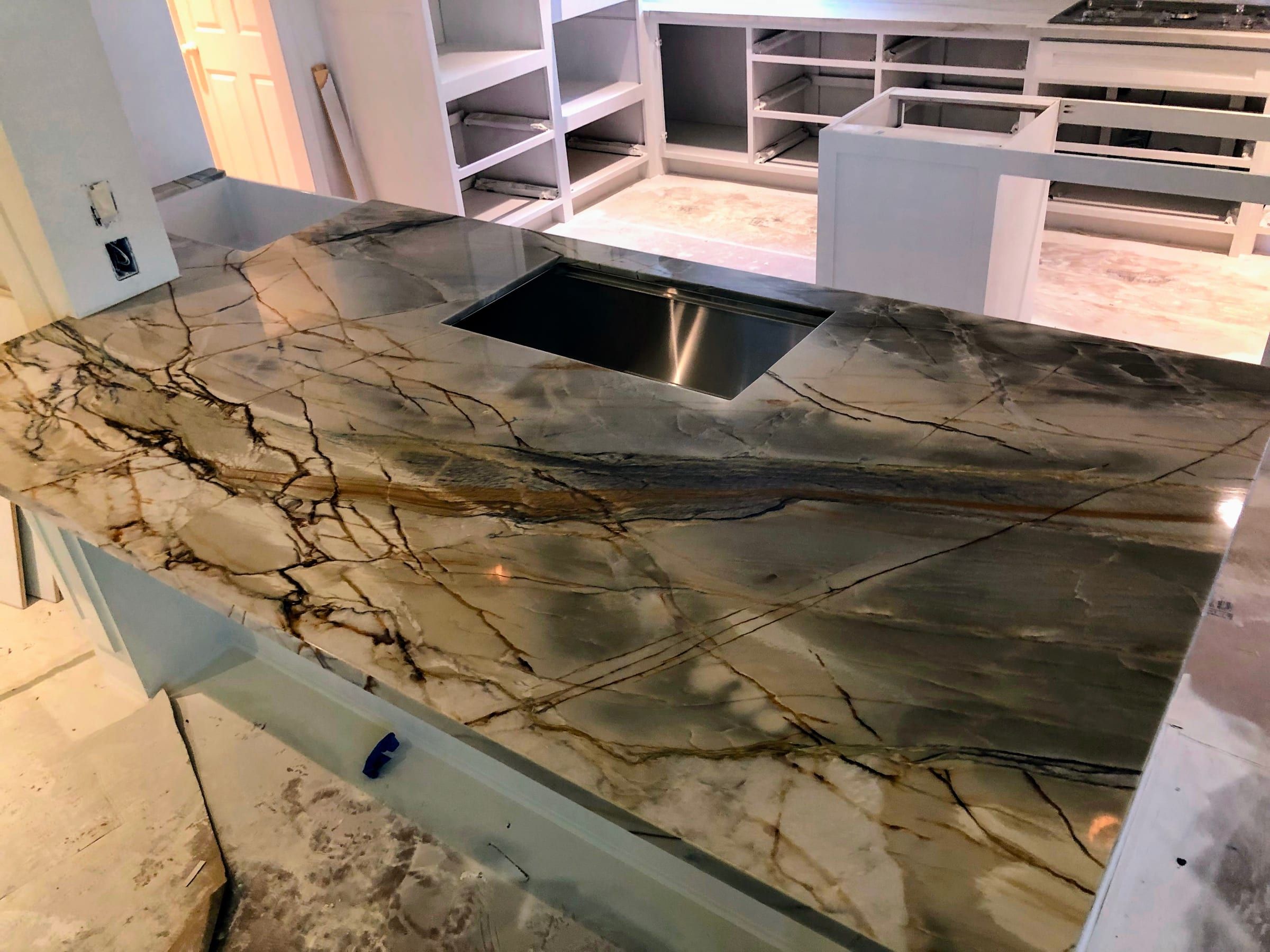
Picking a countertop shouldn’t feel like a homework assignment.
Most guides march through an alphabetical list or push whatever their manufacturer sells. Here at Stone Folks, Pat Folks and the crew fabricate granite, quartz, and marble out of our Rockwall shop, and we’re laying out the kitchen countertop types the way we’d walk you through it in your own kitchen. We’re veteran and family-owned, and the same team that templates your kitchen also cuts and installs it.
Many factors shape this decision, but it comes down to five things: durability, upkeep (mostly sealing), heat and stain resistance, appearance, and budget.
Natural Stone vs. Engineered Stone
Kitchen countertop materials break into two camps. Common materials like granite and marble are natural stone, quarried from the ground, and most need sealing on a schedule. That schedule is easy to lose track of, and it’s something we watch for in plenty of North Texas kitchens we’re asked to reseal.
Engineered stone, quartz being the best example, is made from synthetic materials to a consistent formula and often skips sealing. Laminate and solid surface follow that logic, and so does stainless steel, even though none of these are stone at all.
Comparing Kitchen Countertop Materials
| Material | Family | Durability | Sealing | Heat Resistance | Cost Tier | Best Use |
|---|---|---|---|---|---|---|
| Granite | Natural stone | Very high | Periodic | Excellent | Premium | Busy kitchens |
| Quartz | Engineered | Very high | Never | Good, use a trivet | Premium | Low-upkeep kitchens |
| Marble | Natural stone | Moderate | More frequent | Good, etches from acid | Premium | Vanities, low-traffic |
| Quartzite | Natural stone | Very high | Periodic | Excellent | Premium | Marble look, more toughness |
| Solid surface | Synthetic | Good | Never | Fair | Mid-range | Integrated sinks |
| Laminate | Synthetic | Lower | Never | Poor | Budget | Tight budgets |
| Butcher block | Natural | Moderate | Oil monthly | Poor | Mid-range | Prep zones |
| Concrete | Engineered | Good | More frequent | Excellent | Mid to premium | Custom, industrial looks |
| Soapstone | Natural stone | Moderate | Occasional | Excellent | Premium | Farmhouse kitchens |
| Stainless steel | Metal | Dents easily | Never | Excellent | Premium | Commercial-style kitchens |
| Porcelain | Engineered | Very high | Never | Excellent | Mid to premium | Outdoor kitchens |
| Tile | Mixed | Grout is the weak point | Periodic (grout) | Good | Budget | DIY, small budgets |
This is a starting point. How a slab gets sealed and installed matters as much as the material.
Granite Countertops
Granite is quarried stone, and it’s one of the toughest, most popular countertop materials for a busy kitchen. It resists scratching and stays stain-resistant once sealed. No two slabs are cut from the same rock.
Light-colored countertops remain a popular pick, though many homeowners lean into deeper, natural tones instead. Large kitchen islands have become common in DFW new construction, and granite handles scale well since slabs run wide enough to limit seams across a big surface. Pricing swings widely, from $25 to $200 per square foot installed, with slab rarity driving most of that range.
Granite countertops need periodic sealing near sinks and stovetops to keep stains from soaking in. If you want to see the range of slabs we’re currently cutting, take a look at what’s in stock right now .
Quartz Countertops
Behind every quartz counter is a mix of 90 to 93 percent crushed quartz, bound with resin into an engineered stone. That formula makes it non-porous and low-maintenance, resisting bacteria and never needing sealing.
Quartzite’s been climbing fast too, running second only to quartz in the National Kitchen and Bath Association’s 2026 trends report , and we’re seeing the same thing in the kitchens we template around Rockwall. It’s easy to see why, you get close to a marble look with granite-grade toughness, which is exactly what people want when they’re cooking hard on a big open counter. Installed, quartz runs roughly $50 to $85 per square foot. That’s a narrower range than granite’s $25 to $200, so a common granite color can actually undercut quartz, while a rare exotic slab will run well past it.
The resin can scorch under very high heat, so avoid setting pots directly on the surface and keep a trivet handy. Current quartz inventory changes often, so it’s worth a look before you settle on a color.
We also put together a full breakdown of how quartz and granite actually compare on cost and upkeep.
Marble Countertops
Marble is the material most homeowners associate with luxury, with dramatic veining you won’t find anywhere else. It’s the softest, highest-maintenance stone we fabricate, and pricing varies significantly since rarity and veining drive the cost more than square footage does.
Marble is porous, meaning it soaks up liquid easily and needs regular sealing. It etches on contact with anything acidic, including lemon juice and wine. That etching leaves marks that dull the polish permanently.
Marble earns its keep on lower-traffic projects like a powder room vanity. You can browse photos from recent marble installs we’ve completed.
What About Quartzite?
Quartzite gets confused with quartz constantly, but it’s an entirely natural stone that forms when sandstone meets extreme heat and pressure underground, giving it a glassy look close to marble and hardness that rivals or beats granite.
Our shop focuses on granite, quartz, and marble, but if quartzite is where you land, call us anyway, and we’ll point you toward the right fit. For more, we broke down how it compares to quartz in a separate post.
Other Kitchen Countertop Types
Here’s the rest, briefly.
Solid Surface
Sold under brand names like Corian, solid surface molds into one continuous piece with no visible seams, which lets the sink integrate directly into the counter with no grout line to trap water. The tradeoff is heat: a hot pan left on it can scorch the surface, and while light marks often sand out, a bad burn is permanent.
Laminate Countertops
Laminate is the most cost-effective, budget-friendly pick here, and modern versions convincingly mimic stone at a fraction of the price. It’s a smart call if money’s tight or you’re renovating a rental, though heat and sharp edges remain its two weak points.
Butcher Block and Wood Countertops
Wood countertops work best as a dedicated prep zone on part of an island rather than a full kitchen surround, since the monthly oiling and sensitivity to standing water near a sink add up fast. Used that way, the warm, rustic look is worth the upkeep.
Concrete Countertops
Concrete countertops give a bold, industrial look but are porous and need regular sealing. And here in North Texas, the expansive clay soils that shift home foundations mean a concrete counter can develop a hairline crack over the years, sealer or not.
Soapstone
Soapstone scratches from everyday use, but unlike marble, you can sand and re-oil it back to new yourself. It darkens substantially when oiled, often to a deep charcoal, with a matte look that works well if you want real stone without the shine.
Stainless Steel Countertops
Standard in commercial kitchens since it resists bacteria and heat well and cleans up fast. In a home kitchen, it dents from a dropped pot or a hard knock, a tradeoff worth weighing before you commit to the industrial look.
Porcelain
Low maintenance, and resists heat and stains without sealing, indoors or out. The tradeoff is fabrication: porcelain slabs are thin and can chip during cutting or installation if the crew isn’t experienced with the material.
Tile Countertops
Budget-friendly and DIY-friendly. The tile resists heat and moisture on its own; grout is the real weak point.
Heat-Resistant and Sealing Needs at a Glance
Granite, quartzite, porcelain, and tile countertops take a hot pan without flinching. Quartz and laminate need a trivet instead, since heat can damage the surface.
Granite, marble, quartzite, and concrete need sealing on a schedule. Quartz and porcelain never do, and neither does solid surface. Wood needs monthly oiling instead.
What Do Kitchen Countertops Cost?
As mentioned, granite runs about $25 to $200 per square foot installed, quartz runs $50 to $85, and marble pricing depends heavily on the specific slab.
The biggest swing factor is slab rarity, followed by edge complexity. The comparison table above shows where everything else lands on cost.
How to Choose the Right Countertop
Match your kitchen to a scenario, and you’ll usually land on the right material fast.
- Heavy daily cooking with hot pans: granite or quartzite handles real heat without a second thought.
- Low maintenance, no sealing ever: quartz or porcelain skip the sealing schedule entirely.
- A natural, one-of-a-kind look: granite or marble both deliver that, since no two slabs match.
- An exact color match to your cabinets: quartz is the most repeatable pick, slab to slab.
- A tight budget: laminate first, or ask about a discounted remnant if you only need a small piece.
- An outdoor kitchen: porcelain or granite stands up to sun and weather better than most materials here.
- A bathroom or vanity: marble is the classic pick, and often the perfect spot for a remnant instead of a full slab.
There’s No Single “Best” Countertop
We won’t crown a winner here. The right countertop depends on how you cook, how much upkeep you’re willing to do, the look you want, and your budget. Weigh those four honestly, and the decision gets easier, even if the “best” material turns out to be different for your kitchen than it was for your neighbor’s.
What Our Customers Say
⭐⭐⭐⭐⭐
“Great personalized customer service. They were competitive with their pricing, and responsive! They did an amazing job on the countertops and I could not love them more. We had a terrific experience and I would highly recommend Stone Folks and will use them again!”