
Marble vs Granite Countertops: Which One Belongs in Your Kitchen?
By Pat Folks
- countertops
- granite
- marble
- comparison
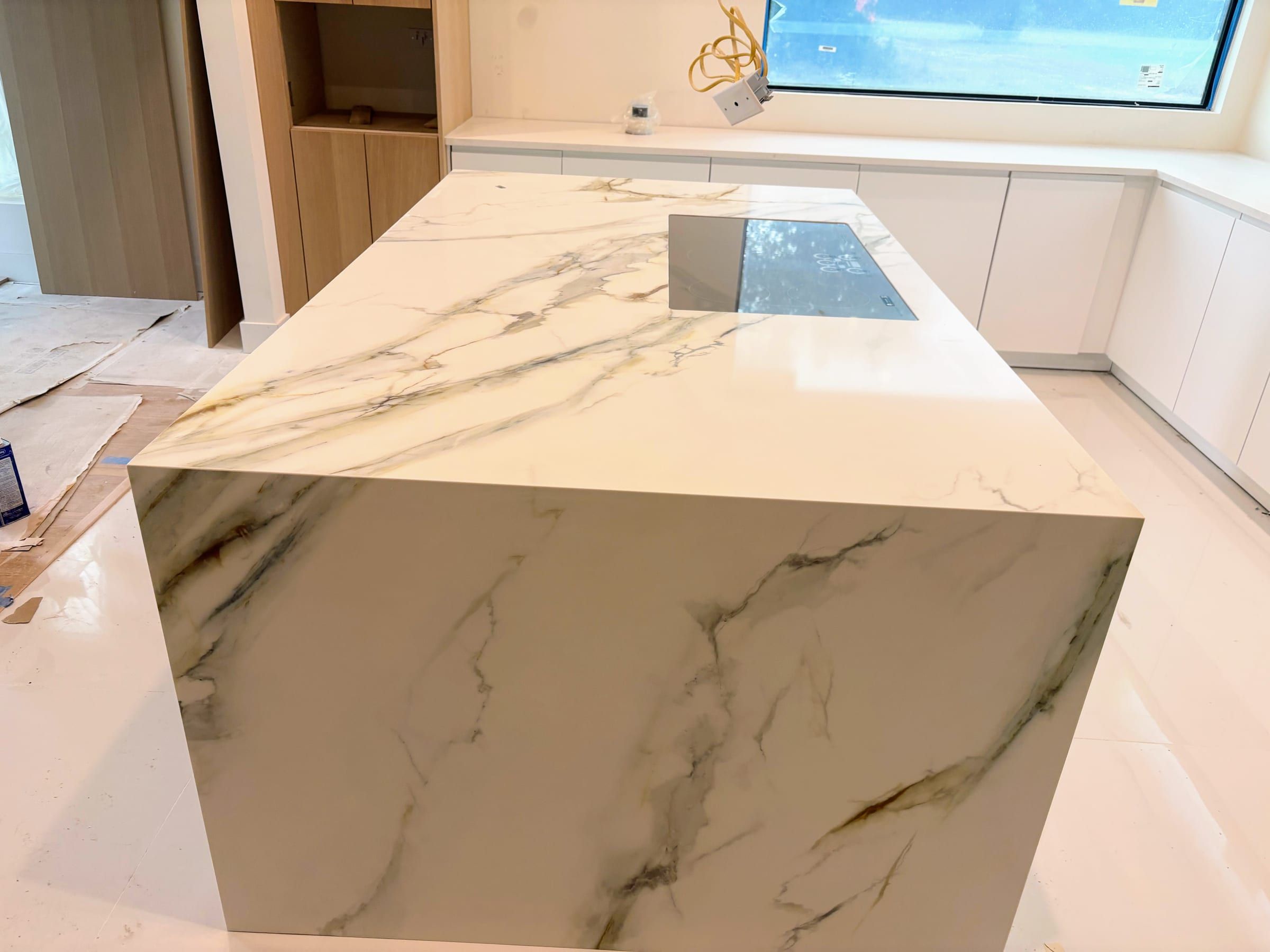
We get this question constantly: which stone can actually take a beating? Granite is the answer, hands down, for anyone who cooks most nights. It shrugs off hot pans and a splash of red wine without a second thought. Marble earns its keep somewhere quieter, an island that sees more admiring glances than knife work, where a little wear just adds character.
Neither of these two natural stones is the wrong pick. We’re Stone Folks, and we’ve installed marble countertops and granite surfaces across Rockwall, Heath, Fate, and the wider Dallas-Fort Worth metro. That kind of experience is why we know the region’s mineral-heavy water leaves visible spotting around sinks and faucets, especially on dark granite, if it isn’t wiped down regularly.
Granite or Marble: The Quick Verdict
For daily cooking, granite wins, and it isn’t close. It resists scratches from knives and cast iron, and it stands up to the wine and lemon juice that hit a cutting board every week. It’s the same resilience we build into every granite installation we complete . Marble can still work in a kitchen for an owner who wipes up spills fast and won’t stress over a dull ring near the stove.
If that sounds like your kitchen, lean granite and skip the extra upkeep. Want a touch of marble anyway? An island or bar top handles wear better than a full run of counters.
What Is the Difference Between Marble and Granite?
Granite is an igneous rock. Magma cools slowly underground, and quartz and feldspar crystals lock into a dense matrix. That process gives granite its speckled appearance and durable structure.
Marble is a metamorphic rock composed mainly of calcite. It starts out as limestone on an ocean floor, and heat and pressure later fold in the clay and iron that become its flowing veins.
Granite shows individual flecks, grain by grain, while marble shows continuous veins like ink dropped in water. A drop of vinegar settles it fast. It fizzes on marble and does nothing to granite, which is the quickest way to tell the two apart if a sample chip isn’t enough.
Granite and Marble Kitchen Countertops at a Glance
Here’s the side-by-side version, since this table answers most of what clients ask us before we ever get to their kitchen.
| Feature | Granite | Marble |
|---|---|---|
| Mohs hardness | 6 to 7 (hard) | 3 (soft) |
| Heat resistance | Excellent with a trivet | Excellent with a trivet, though heat speeds up etching |
| Stain resistance | High when sealed | Moderate, needs regular sealing |
| Etch resistance | Immune to food acids | Etches on contact with acid |
| Sealing frequency | Every 1 to 2 years | Every 3 to 6 months |
| Relative cost | $50 to $250+ per sq. ft. installed | Varies widely, ask for a quote |
| Look | Granular and speckled, wide range of colors and styles | Flowing veins, classic white or grey |
| Best rooms | Kitchens and busy work islands | Bathroom vanities, baking stations |
Hardness and Durability
The Mohs scale measures how easily a mineral scratches, on a scale of 1 to 10, and it explains the main difference between these two materials. Granite rates 6 to 7, above a knife blade or glass plate, and with proper care, it holds its finish for decades.
Marble’s dominant mineral, calcite, rates 3 on the National Park Service’s hardness scale, and that gap is why a paring knife or a heavy mug set down hard can scratch marble while granite comes through the same daily contact unmarked.
Staining vs Etching: The Real Difference
This is the point most comparison articles get wrong. Staining happens when a liquid soaks into a stone’s pores and leaves color behind. Sealing helps prevent stains on both materials by filling the pores so liquids bead up instead of soaking in.
Etching only happens to marble. Acidic substances react instantly with its calcium carbonate, dissolving a thin layer of the polished surface into a dull, pitted spot. Lemon juice and vinegar will damage marble whether it’s sealed properly or not, since a sealer does nothing to protect the surface itself.
Which Stains and Etches More Easily?
Marble does both more easily than granite. It’s more porous, so it picks up stains faster without regular sealing, and it reacts to acids in a way granite simply can’t. Granite stays stain-resistant when sealed and won’t etch under normal use.
We’ve fielded this conversation more than once. A homeowner spots a dull ring on a marble island, certain it’s a defect, and the honest answer comes down to a lemon wedge or a splash of wine left sitting a little too long. No sealer could have stopped that.
Heat Resistance and Everyday Care
Both stones handle high temperatures better than engineered quartz, whose resin binder scorches above 300 degrees Fahrenheit. A trivet still matters, since a hot pan on a cool surface can stress tiny existing cracks into bigger ones.
Reseal granite every 1 to 2 years, and reseal marble every 3 to 6 months to keep up its natural shine. Clean granite surfaces with mild soap and water, and clean marble with a pH-neutral cleaner, since regular household cleaners can etch marble too. Wipe up wine or sauce fast to avoid damaging marble. If a stain sets in anyway, the Natural Stone Institute’s stain removal guide recommends a poultice that pulls it back out over 24 to 48 hours.
Is Marble More Expensive Than Granite?
Granite installation runs $50 to $250 or more per square foot installed, according to HomeGuide’s granite countertop cost data , with most jobs landing in the $80 to $150 range depending on the slab’s size, thickness, and grade. Marble pricing varies too much to quote a flat range, since a common white marble and a rare imported vein pattern can be worlds apart in cost.
Installation costs come down to the slab itself, where it was quarried, and how rare the veining is. Edge profiles or sink cutouts add work on top. Every slab is one of a kind, which is why we walk clients through the slab yard in person instead of working from a small stone sample.
Marble doesn’t automatically cost more than granite. It’s worth getting a real quote on your specific slab before you rule it out.
Marble Kitchen Countertops: When They Make Sense
A heavy-cook kitchen is granite’s territory. Marble is a better fit in bathroom vanities instead, since traffic is lighter and acid exposure is rare there. See our marble countertop work for examples of where it holds up best. It also earns real value on a baking station, since it stays naturally cool to the touch, and on a fireplace surround where it sees almost no contact at all.
Resale Value and Marble’s Patina
Granite looks about the same at year fifteen as it did at year one, which supports your home’s resale value. Marble ages differently. It develops a patina, a soft, worn-in shine, and whether that reads as a flaw or as the whole appeal depends entirely on the buyer.
Where Quartz Fits In
If you want marble’s look with granite-level toughness, engineered quartz deserves a glance. It resists staining and etching better than either natural stone since it’s non-porous, though it gives up some heat tolerance.
Marble Remnants: A Smart Way In
A small marble project, like a powder room vanity or a bar top, is a good candidate for remnants instead of a full slab. Remnants are leftover pieces from larger jobs, the same quality as a full slab, just smaller, and they make marble affordable in a tight space.
The Stone Folks Difference
We’re veteran-owned and family-run, serving Rockwall and reaching well into the wider DFW metro. Every job stays in-house, from the first digital measurement to the final polished seam, so the same team that measures your kitchen installs it too. If heavy daily use makes marble the wrong call, we’ll say so and let you decide.
The full rundown of countertop materials we cover walks through quartz and the rest of the lineup, for anyone weighing the bigger picture before deciding between just these two stones. If you’re a veteran or currently serving, ask about the military discount when you request your estimate.
⭐⭐⭐⭐⭐
“This was the easiest process we have ever done. Very professional. GREAT communication. They were fast and very friendly. From the office lady to the installers. If we ever have a needs for this service again they will definitely be our go to business. If you are thinking about countertops they are the first people you should call. Recommend 10/10.”
Stone Folks is family-owned and veteran-owned. Call 214-980-2778 , or book directly online if that works better for your schedule. We’ll walk you through real granite and marble slabs at the yard, no pressure attached.